
This content was aggregated from local dealer data and insights provided by the USA Today Network Automotive Insights team using Google Gemini and the Vehicles for Sale Near Evansville marketplace writing team.
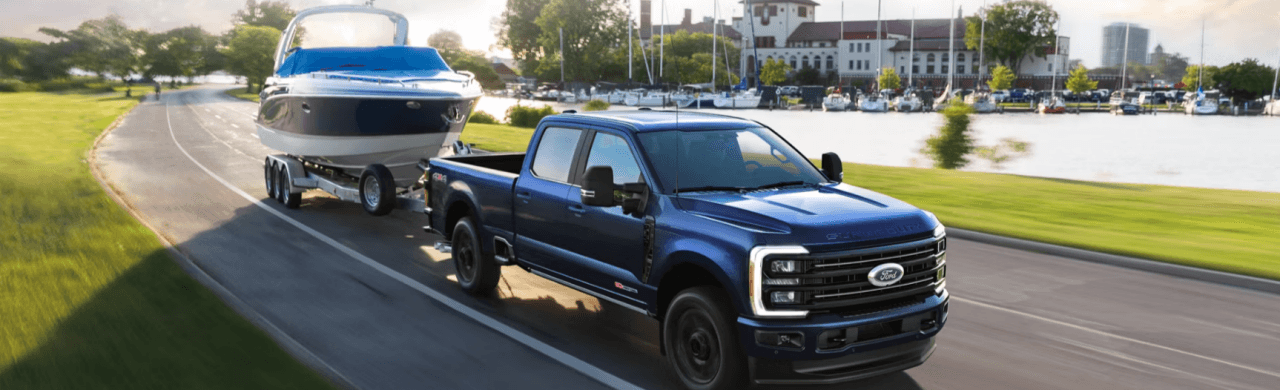
Towing with a heavy-duty pickup requires more than choosing a truck with a high published towing number. Evansville buyers considering a 2027 Ford Super Duty F-250 should first determine the trailer's actual requirements and then verify that the specific truck has the appropriate configuration and equipment.
The 2027 Ford Super Duty XLT may be one option to consider, but trim level alone does not establish towing capability. Engine, drivetrain, cab, axle configuration, hitch equipment, payload, trailer characteristics, and other specifications can affect what a particular truck can safely tow.
Start with the trailer rather than the truck. Identify the trailer's loaded weight, tongue weight, dimensions, hitch type, and intended use.
A trailer's actual operating weight can be substantially different from its empty or advertised weight once cargo, passengers, equipment, and other loads are included. Buyers should therefore work from realistic loaded figures whenever possible.
Before shopping for a new Ford Super Duty F-250, determine:
The trailer's expected loaded weight.
Estimated tongue or pin weight, depending on trailer type.
Hitch requirements.
Trailer-brake requirements.
Required electrical connections.
Number of passengers and other cargo carried in the truck.
Expected towing frequency.
Whether the trailer configuration requires specialized equipment.
Once those requirements are established, compare them with the ratings and equipment of the specific truck.
Do not treat a general model-level towing figure as the rating for every F-250. Ford's published towing information should be checked against the exact configuration and applicable equipment.
The Ford Super Duty F-250 is designed for heavy-duty work, but buyers should evaluate the complete towing system rather than focusing on engine output or maximum towing capacity alone.
Important areas to review include:
Engine and transmission configuration.
Four-wheel-drive or two-wheel-drive configuration.
Cab and bed configuration.
Axle and gearing information where applicable.
Conventional towing equipment.
Fifth-wheel or gooseneck equipment when applicable.
Trailer-brake integration.
Trailer electrical connections.
Payload rating.
Hitch and receiver specifications.
The truck must account for more than the trailer itself. Passengers, tools, cargo, accessories, and hitch-related loads can contribute to the truck's overall weight.
That is why the correct question is not simply, "How much can an F-250 tow?" It is, "Can this particular F-250 configuration safely and appropriately handle my loaded trailer and the other loads I will carry?"
Before purchasing, match the truck and trailer on paper.
First, establish the trailer's loaded weight. Next, identify the appropriate towing method and hitch requirements. Then verify the truck's applicable towing, payload, hitch, and axle ratings using the vehicle-specific information.
A useful checklist includes:
Confirm the trailer's loaded weight.
Determine the trailer's tongue or pin-weight requirements.
Confirm the required hitch type.
Check the truck's applicable towing rating.
Check payload capacity.
Verify hitch and receiver specifications.
Confirm trailer-brake and electrical requirements.
Account for passengers and cargo.
Verify that the specific truck has the equipment needed for the trailer.
Follow the manufacturer's towing instructions.
The 2027 Ford Super Duty XLT should be evaluated in exactly the same way. The trim name can identify a vehicle's equipment level, but it should not be used by itself to determine whether the truck is appropriate for a particular trailer.
If your towing needs are close to a vehicle's published limits, take the time to verify the exact numbers rather than relying on estimates. Staying within applicable ratings is an important part of responsible towing.
A towing-capable truck still needs to work when the trailer is disconnected. Evansville buyers should consider how often the F-250 will be driven without a trailer and whether its size, configuration, and equipment suit normal transportation needs.
Think about:
Daily commuting.
Local errands.
Work-related driving.
Highway travel.
Trailer storage and hookup requirements.
Frequency of towing.
Service access.
Fuel and maintenance budgeting.
The Evansville, IN–KY area can also provide a broader shopping radius when comparing available configurations. A truck at a different dealership may be worth considering if it has the equipment your trailer requires.
If you are researching Expressway Ford, use current listings to identify potential F-250 candidates, then verify the exact configuration and towing equipment before making a purchase decision.
Towing capability should ultimately be matched to the actual trailer, not selected based on a trim badge or a single maximum number.
Determine the trailer's loaded weight and tongue or pin weight, then compare those figures with the towing, payload, hitch, and other applicable ratings for the specific F-250 configuration. Verify the required equipment as well.
Towing capacity can vary according to configuration and equipment. The XLT designation alone does not establish one universal towing figure. Verify the exact truck's specifications and applicable Ford towing information.
No. The relevant planning figure should account for the trailer's expected loaded condition. Cargo and other additions can increase the trailer's operating weight and affect the truck's requirements.
Payload accounts for weight carried by the truck itself. Passengers, cargo, hitch-related loads, and other items can contribute to the truck's weight, so towing capacity should not be considered independently from payload.
Identify whether the trailer uses a conventional receiver hitch, fifth-wheel connection, gooseneck connection, or another setup. Then verify that the truck has the appropriate equipment and ratings for that towing method.
The truck's drivetrain is one of the configuration details that should be considered when verifying towing specifications. Use the ratings applicable to the exact vehicle rather than assuming all F-250 configurations have identical capabilities.
Yes. Determine whether the trailer requires brakes and confirm that the truck has the appropriate brake-control and electrical equipment for the trailer.
Bring the trailer's specifications, including its expected loaded weight, hitch type, and relevant weight ratings. Having those details available makes it easier to determine whether a specific truck is properly matched to your towing requirements.
Once you know the trailer requirements, compare them with available trucks. Explore Ford Super Duty F-250 listings near Evansville, then verify the exact truck's configuration, equipment, applicable ratings, and current availability before purchasing.
Written for https://vehiclesforsalenearevansvillein.com
By the USA TODAY Network Automotive Insights Team, in collaboration with Expressway Ford and the Vehicles for Sale Near Evansville - Courier & Press.
Disclaimer: This article's content is intended for informational purposes only. Vehicle specifications and features are based on data provided by J.D. Power and local dealerships and may vary by individual vehicle, VIN, trim, configuration, packages, and optional equipment. Vehicle images may not depict the exact model, trim, features, packages, accessories, or specifications described. Vehicle pricing, availability, features, and specifications are subject to change without notice. Please reference the dealership's vehicle listing and window sticker or consult the dealership directly for complete and accurate details.